Hierophis carbonarius
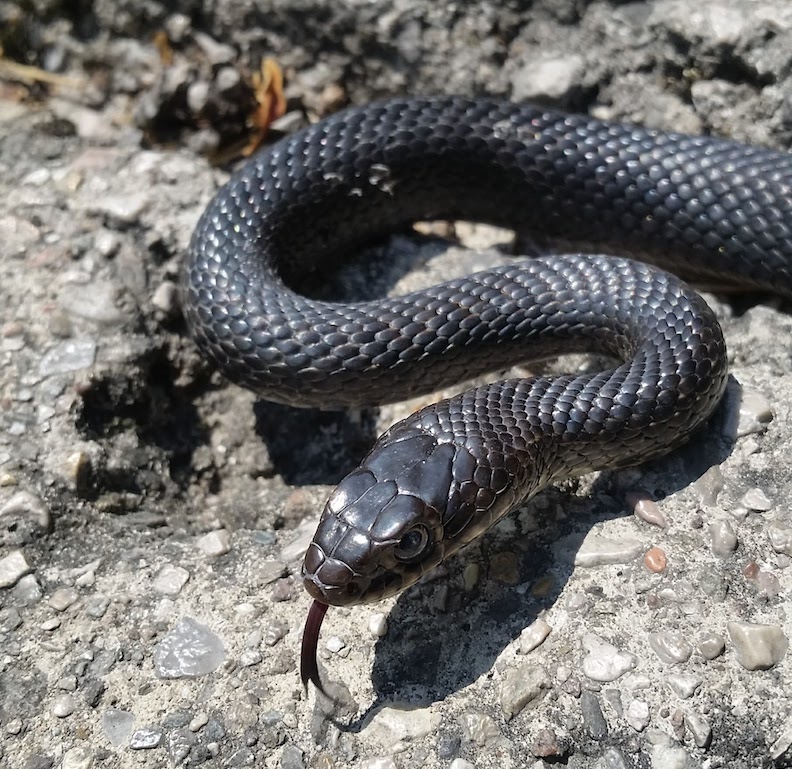
BIACCO NERO
I biacchi sono i serpenti italiani più diffusi e comunemente osservati: li si può trovare in ogni ambiente fino ai 1200 metri di altitudine circa. Preferiscono suoli aridi, e di sovente si rinvengono nei pressi delle abitazioni e nei giardini. Sono i serpenti europei più veloci, quindi spesso li si riesce a notare solo di sfuggita. Possono raggiungere il metro e mezzo di lunghezza, e cacciano rettili (anche altri serpenti, velenosi e non), piccoli roditori e uccelli, che uccidono con una rozza costrizione prima di essere ingollati. Serpenti nervosi e reattivi, non esitano a mordere ripetutamente se vengono catturati o se non hanno possibilità di fuga. Il morso provoca però al massimo qualche escoriazione superficiale e un incontro ravvicinato è abbastanza raro. Si è di recente scoperto, tramite analisi molecolari, che in Italia vivono due specie, distinte su base genetica: il biacco nero (Hierophis carbonarius), presente in Italia nord-orientale (anche in Trentino e intorno al lago di Garda) e il biacco verde-giallo (Hierophis viridiflavus), presente in Italia nord-occidentale e nel centro-sud.
WESTERN WHIP SNAKE
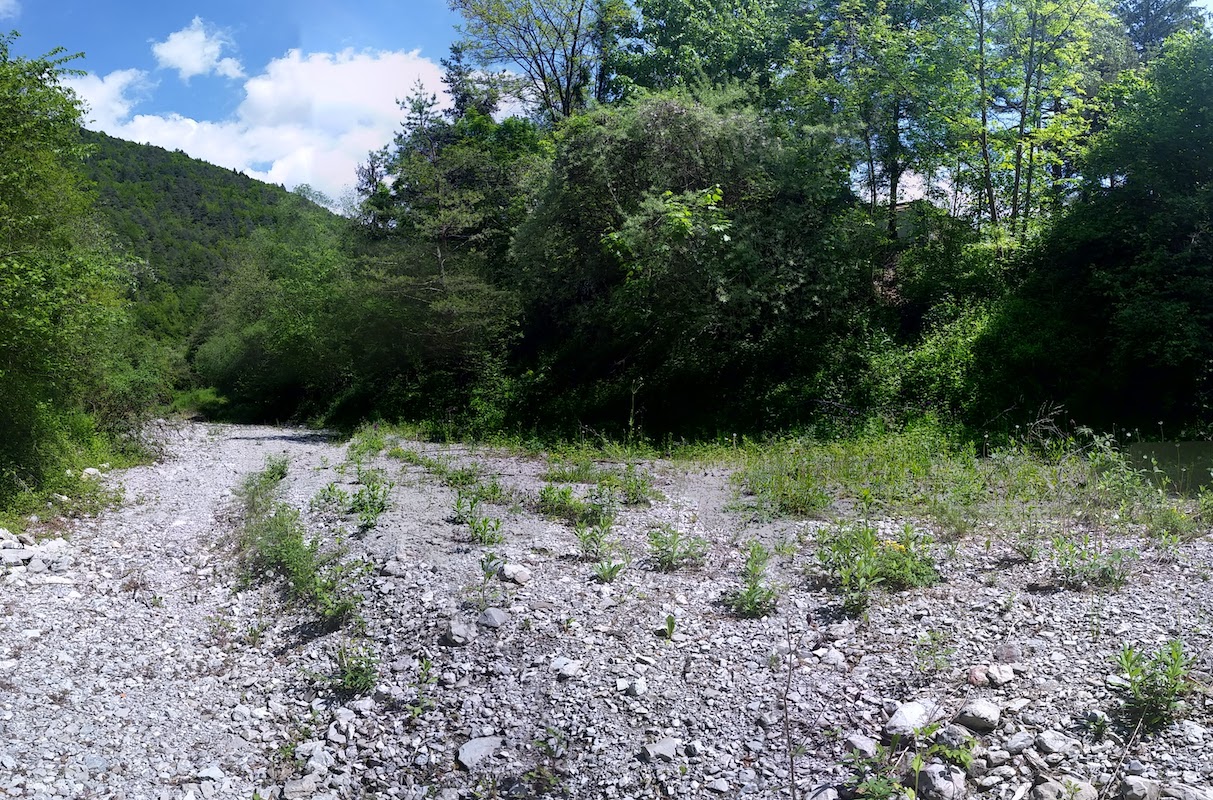
The italian most widespread snake, it can be found in almost every environment, preferring a wide variety of dry, warm, open biotopes, e.g. maquis, heathland, forest edges but also man-made habitats such as gardens and orchards.
It is a diurnal, strong and fast snake that actively hunts for a wide range of preys: lizards, other snakes, small mammals and birds.
Reaches 150 cm and the adults, in the north east region, including Trentino, are usually completely black. Juveniles are grey, olive or brownish, with a darker head.
Bites persistently when caught or handled, but absolutely not dangerous.
Molecular analysis recently revealed two distinct species present in Italy: Hierophis carbonarius, in the north-east (Trentino and lake Garda included) and Hierophis Viridiflavus, in northern-western and southern-central Italy.
Ambiente - Environment